

Managing an Interior Design and Furniture Budget
Keep an interior design and furniture budget organised in Portugal: maintain one specification, check complete costs and approve substitutions before ordering.

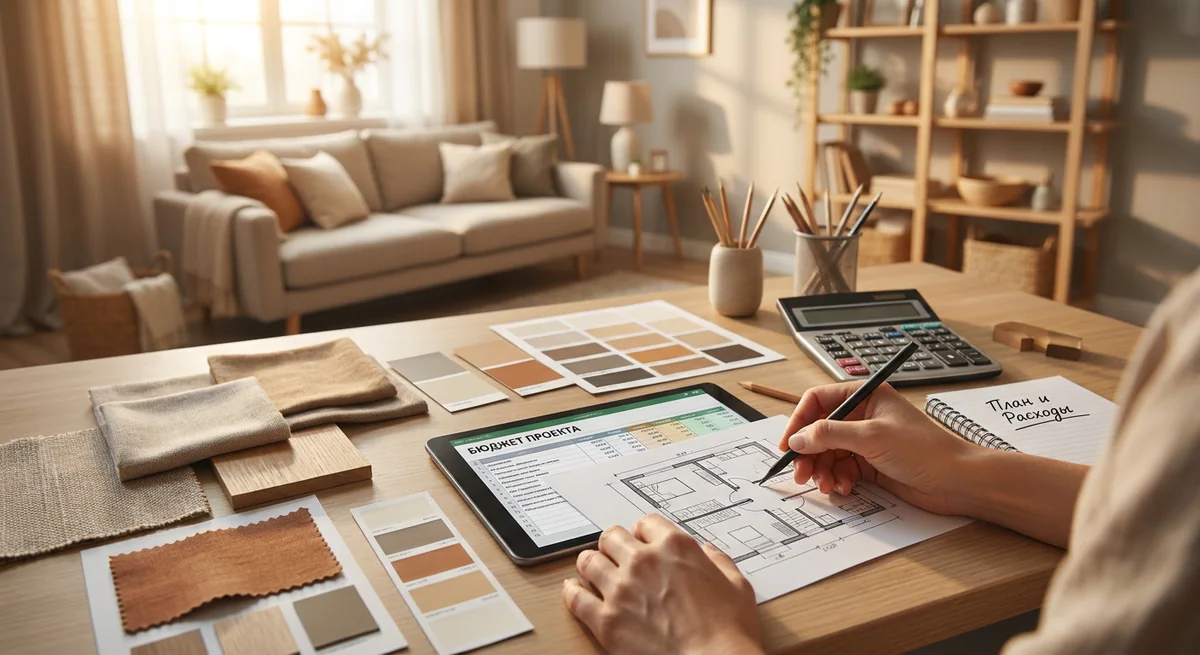
Once a budget is agreed, you need to see how individual choices affect the total. A discount on one product does not necessarily reduce the overall cost: delivery, assembly or related selections may change. Control starts with an up-to-date specification and a clear approval process.
This guide concerns tracking costs and purchases. For the earlier stage, see how to allocate a home furnishing budget.
1. Record the scope and starting budget
List rooms, products and work included, and identify anything excluded or postponed. Mark each amount as an estimate, quotation or confirmed order. This makes subsequent changes understandable.
Agree the design project scope separately from home furnishing and purchasing support in Portugal. Documentation and the organisation of purchases require different actions. Identify who calculates and who approves each expense.
2. Keep one current item schedule
Record reference, version, quantity, dimensions, seller, price, date checked and decision status. Include the complete delivery and service costs. Update the schedule after each approved change so different conversations do not leave conflicting versions.
| Item group | Possible status | Check before ordering |
|---|---|---|
| Main furniture | Selected / approved / ordered | Dimensions, finish, quantity, stock and delivery |
| Bespoke item | Drawing / measurement / quotation / approval | Approved details, cost scope and making terms |
| Lighting and components | Selection / checking / order | Complete set, compatibility and installation needs |
| Delivery and assembly | Estimate / agreement / booking | Address, access, service scope and contact person |
3. Recheck the complete cost before paying
Compare the offer with the approved reference, quantity and components. Clarify what is included and what is still an estimate. If availability or terms have changed, update the total before approving the order.
Check fit and the delivery route as well as price. The guide to starting a design project explains the sequence of layout and selection decisions.
4. Agree how substitutions are approved
Compare replacements by function, dimensions, material, appearance and total cost. Check related selections: a different table size may affect chairs and lighting.
Keep a change log showing the old decision, replacement, reason, cost difference and approval. Do not issue an option for implementation while it is still being discussed. Everyone needs one approved version.
5. Separate payments from future commitments
Track what has been ordered, what has been paid and payments still required under the order terms. A proposed selection is not an order. Check for double counting, such as assembly recorded both separately and within a quotation.
Calculate the available balance after known commitments. Whether an existing order can be changed or cancelled depends on its actual terms; do not assume it can.
6. Connect contingency to open questions
Identify unconfirmed dimensions, work and prices. Update the budget as questions are resolved rather than applying a universal allowance. Avoid treating the balance as freely available while essential items remain unpriced.
A practical example
The Leiria home furnishing diary shows a sequence of selections, orders, deliveries and assembly. It helps illustrate dependencies, not a standard budget or deadline.
Collect your current schedule, plans, existing orders and questions. A design consultation can address specific decisions; furnishing support can organise a wider purchasing task. Describe what help you need to discuss the appropriate scope.