

Small living room: furniture selection and layout
Furnish a small living room: select seating, check circulation, storage, lighting and furniture dimensions. Prepare a coordinated purchase list for your home.

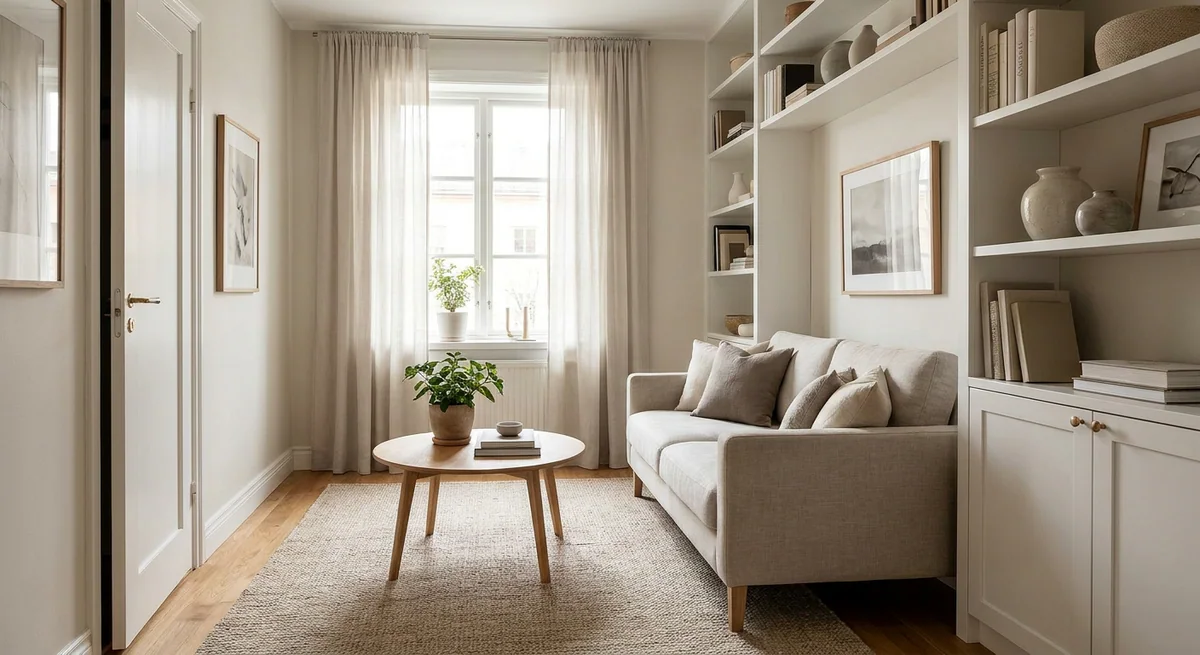
A small living room should support everyday activities: conversation, reading, relaxing, visitors or watching a screen. Start with those activities and circulation. A pale palette or a mirror cannot correct furniture that is difficult to use.
In my apartment furnishing service in Portugal, products are checked within an overall plan. The small apartment layout guide considers the whole home; this article focuses on the seating area and its furniture.
Separate regular and occasional uses
Record the usual number of people, any additional seats needed and whether guests stay overnight. List furniture you want to keep. Avoid dedicating the main floor area to permanent seating for rare occasions if another arrangement would serve them.
Where the kitchen shares the room, first review the circulation of the open-plan space. Furniture must allow doors to open and neighbouring areas to remain accessible.
Assess the sofa's seating and full dimensions
Compare depth, arms and seating experience as well as width. Try the model in person where possible. What matters is the useful seating and fit with your routines, rather than the label compact.
For a sofa bed, show both positions and space for bedding or extra components. Check what can move without rearranging the whole room every day. Confirm delivery through doors, stairs and lifts separately.
Check furniture in use
Draw the sofa, tables, chairs and storage to scale. Include circulation, open cabinet fronts and window access. Check whether you can place a cup, reach a light and use neighbouring items at the same time.
There is no single sofa size for every small room. The small apartment furniture guide explains product checks, while the home zoning guide covers the wider layout logic.
Coordinate storage and equipment
Allow for books, devices and daily belongings before selecting fronts. Review cables, connections and maintenance access. Compare open and closed storage against what you own and how you prefer to keep the room organised.
If the room also contains a work area, show it separately on the plan. For regular calls, consult the guide to space for online meetings, rather than simply adding another table.
Bring lighting, textiles and finishes together
View samples beside the floor and retained furniture. Select rugs and curtains for their role, dimensions and care requirements. Check the relationship between these pieces and the furniture arrangement before ordering.
Use the lighting plan to distinguish reading, general light and evening relaxation. Check screen reflections and access to controls. An interior design project coordinates these decisions with furniture positions.
Small living room questions
Do I need a corner sofa?
No. Compare it with a straight sofa and separate seats through actual activities and circulation. One format does not suit every room.
Can some existing furniture stay?
Yes. Send a plan, dimensions and photographs of retained pieces for a design consultation. We can start from what stays and identify the necessary changes.